September 21, 2026
OEM & ODM Garment Accessories for International Apparel Brand Cooperation
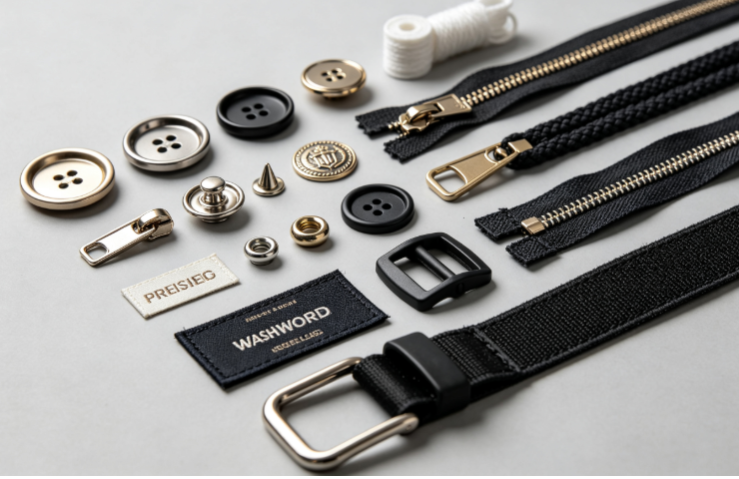
Table of Contents
1. Overview of OEM & ODM Garment Accessories for Global Brands
2. Difference Between OEM and ODM for Garment Accessories
3. Main OEM & ODM Product Range for Apparel Brands
4. Global Market Data of Custom Garment Accessories
5. Core Capabilities Required for Brand oriented OEM & ODM Production
6. Strict Compliance Standards for International Apparel Partners
7. Standard OEM & ODM Cooperation Workflow
8. Key Points for International Brand Partners to Select Accessory Manufacturers
9. FAQ
H2: 1. Overview of OEM & ODM Garment Accessories for Global Brands
Nowadays, most international apparel brands outsource accessory production to professional manufacturers. OEM and ODM garment accessories services help fashion clients obtain private label hardware and soft trims without building their own production workshops.
OEM means manufacturing accessories strictly according to brand provided drawings, samples and technical specifications. ODM provides one stop service including concept design, structural development, material selection, sample making and mass production.
Reliable OEM / ODM suppliers become important upstream partners for casual wear, sportswear, outdoor clothing and children’s clothing brands. They support brand differentiation by custom logos, special textures and exclusive mould developed trims.
H2: 2. Difference Between OEM and ODM for Garment Accessories
H3: 2.1 OEM (Original Equipment Manufacturing)
· Brand provides finished samples, technical drawings, logo artwork and full specifications
· Manufacturer follows given requirements for raw material procurement, production and inspection
· Product design, structure and style are fully defined by the brand side
· Suitable for brands with mature accessory design documents
H3: 2.2 ODM (Original Design Manufacturing)
· Manufacturer provides existing reference designs, material options and structural solutions
· Joint development: brand puts forward demand orientation; factory completes design, mould opening and sample iteration
· Brands can modify shapes, surface treatment, logo and color based on factory developed prototypes
· Suitable for brands wanting new accessory styles but without complete drawing resources
H2: 3. Main OEM & ODM Product Range for Apparel Brands
H3: 3.1 Metal & Plastic Hardware Accessories
Custom logo zippers & sliders, engraved metal buttons, snap buttons, rivets, eyelets, alloy badges, belt buckles, plastic fasteners, exclusive mould decorative hardware.
H3: 3.2 Soft Trims & Label Series
Custom woven labels, printed tags, care labels, brand printed webbing, drawcords, elastic tapes, hook and loop, sewing threads, hang tags.
H3: 3.3 Full set Matching Accessory Packages
Complete accessory kits for single apparel style: including buttons, zippers, labels and packing accessories, delivered as one consolidated batch.
H2: 4. Global Market Data of Custom Garment Accessories
In 2025, the global OEM & ODM garment accessories market reached USD 34.19 billion. More and more international fashion brands choose to outsource custom trim production to Asia based qualified manufacturers.
表格
Brand Category | Market Share 2025 | Main OEM & ODM Demand Focus |
Fast Fashion Brands | 44.7% | Short lead time, cost effective OEM accessories, small batch flexible orders |
Mid to high end Fashion | 27.2% | ODM exclusive mould hardware, premium surface finishing, high quality texture |
Sports & Outdoor Brands | 20.4% | Functional ODM trims: wear resistant, anti rust, high tensile webbing & fasteners |
Kids wear Brands | 7.7% | Safety oriented OEM accessories, strict harmful substance control |
Compliance certifications such as OEKO TEX, REACH and CPSIA have become basic requirements for cross border OEM & ODM accessory orders.
H2: 5. Core Capabilities Required for Brand oriented OEM & ODM Production
1. Independent mould opening capacity: develop exclusive moulds for brand custom shapes and logos
2. Multi material processing: metal alloy, plastic, fabric weaving, printing and dyeing supporting
3. In house lab testing: pull resistance, color fastness, anti rust performance and harmful substance detection
4. Strict file management: keep brand artwork, mould data and sample records confidential
5. Flexible order management: support pre production sampling, pilot small batch trial and mass scale repeat orders
6. Export oriented logistics: meet international packaging and cross border shipment requirements
H2: 6. Strict Compliance Standards for International Apparel Partners
· Chemical safety: azo free, heavy metal restriction, phthalate control, match REACH & OEKO TEX standards
· Physical safety: pull off resistance for buttons & snaps, sharp edge prohibition, special safety indexes for children’s garments (CPSIA)
· Surface quality: consistent color matching, stable plating & printing effect, no burrs or scratches
· Document support: inspection reports, material certificates, test records provided for brand audit
H2: 7. Standard OEM & ODM Cooperation Workflow
1. Demand communication: brand clarifies product type, artwork, target material, quantity, compliance standard and delivery schedule
2. Solution confirmation: OEM → confirm drawing / sample; ODM → select reference prototype + adjust design concept
3. Mould development & pre production sampling: open exclusive mould if needed; send physical samples for brand approval
4. Mass production: raw material incoming inspection, formal production, in line quality check
5. Finished goods testing and final inspection
6. Export grade packing and arrange international delivery
H2: 8. Key Points for International Brand Partners to Select Accessory Manufacturers
1. Verify whether the factory owns independent mould making capability for custom logo items
2. Confirm applicable compliance certificates matching target sales regions
3. Evaluate sample making speed and communication efficiency for iteration modification
4. Clarify mould ownership, confidentiality agreement and intellectual property clauses
5. Confirm production capacity for both trial small batches and large volume seasonal orders
H2: 9. FAQ
H3: Q1: What is the minimum order quantity for OEM & ODM garment accessories?
A: MOQ differs greatly. Standard OEM accessories with existing moulds support relatively low MOQ. ODM items requiring new exclusive mould opening have higher minimum order quantity.
H3: Q2: Will the manufacturer keep brand related drawings and logos confidential?
A: Formal OEM & ODM cooperation can sign non disclosure agreement (NDA). Artwork, samples and mould files will not be shared with third party brands.
H3: Q3: Can you provide complete test reports for brand audit?
A: Yes. Physical performance test reports and chemical compliance documents can be supplied according to clients’ target market requirements.